


The Sister Seven exhibition has been on the road from January 1982.
From the summer of 1981 we had close links with Greenham: Ev took part in the Peace Camp Cardiff to Greenham that established the Peace Camp, and it was the Peace Camp women who, in February 1982, arranged the first showing of the exhibition and evening of performances in the Arts Workshop in Newbury, then feasted us and put us up for the night in caravans and teepees.
Since then the exhibition has been shown in about 70 different places in libraries and polytechnics, women’s centres and community arts centres, from London to Wolverhampton and Bristol to Edinburgh. It has been put up at festivals and weekend conferences, gone to Green Gatherings and to Molesworth Peace Camp, and been shown in Birmingham WEA venues for a month. Parts of it were also shown in a women’s anti-nuclear exhibition in New Zealand, and later in Los Angeles as part of a large anti-nuclear exhibition organised by Sisters of Survival.
It is encouraging that the exhibition has been in great demand. But perhaps more important for all of us in Sister Seven has been the experience of working together to make the exhibition, send it out, and sometimes go with it to do performances and poetry readings. Sister Seven enabled us, as feminist artists and writers, to bring together our different kinds of work and learn from each other, while providing each of us with a focus for anti-nuclear activity. Working together has been, and is, wonderfully energising: it has given us the sense that we can do, and are doing, something to help bring about a non-nuclear world.
September 1983.
The exhibition of 22 posters, bringing together conceptual work, graphics, poetry, and fiction, was available for hire. Sister Seven could accompany it with performances, poetry readings, and discussions of the issues, and packs of the exhibition and individual items were offered for sale.
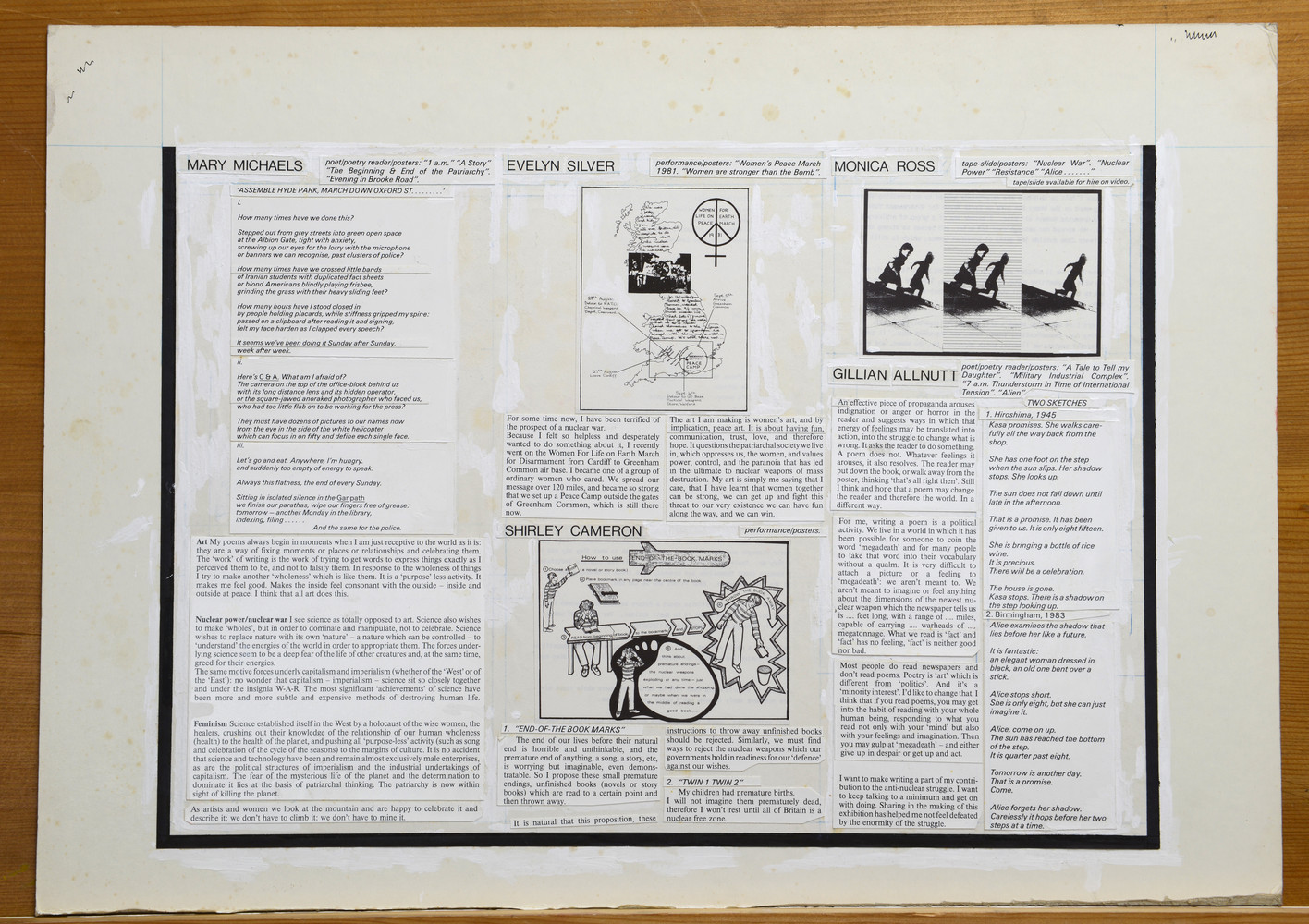
Poster back text
Mary Michaels
poet/poetry reader/posters: I a.m., A Story, The Beginning & End of the Patriarchy, Evening in Brooke Road.
Evelyn Silver
performance/posters: Women’s Peace March 1981, Women are stronger than the Bomb.
Monica Ross
tape-slide/posters: Nuclear War, Nuclear Power, Resistance, Alice. Tape/slide available for hire on video.
Gillian Allnutt
poet/poetry reader/posters: A Tale to Tell my Daughter, Military Industrial Complex, I a.m. Thunderstorm in Time of International Tension, Alien.
An effective piece of propaganda arouses indignation or anger or horror in the reader and suggests ways in which that energy of feelings may be translated into action, into the struggle to change what is wrong. It asks the reader to do something. A poem does not. Whatever feelings it arouses, it also resolves. The reader may put down the book, or walk away from the poster, thinking “that’s all right then”. Still I think and hope that a poem may change the reader and therefore the world. In a different way.
For me, writing a poem is a political activity. We live in a world in which it has been possible for someone to coin the word “megadeath” and for many people to take that word into their vocabulary without a qualm. It is very difficult to attach a picture or a feeling to “megadeath”: we aren’t meant to. We aren’t meant to imagine or feel anything about the dimensions of the newest nuclear weapon which the newspaper tells us is clear weapon with the newspaper tells us “can feel long with a range of ... miles, capable of carrying ... warheads of ... megatonnage”. What we read is “fact” and “fact” has no feeling, “fact” is neither good nor bad.
Most people do read newspapers and don’t read poems. Poetry is “art” which is different from “politics”. And it’s a “minority interest”. I’d like to change that. I think that if you read poems, you may get into the habit of reading with your whole human being, responding to what you read not only with your “mind” but also with your feelings and imagination. Then you may gulp at “megadeath” - and either give up in despair or get up and act.
Two Sketches
1. Hiroshima, 1945
Kasa promises. She walks carefully all the way back from the shop.
She has one foot on the step
when the sun slips. Her shadow
stops. She looks up.
The sun does not fall down until
late in the afternoon.
That is a promise. It has been
given to us. It is only eight fifteen.
She is bringing a bottle of rice
wine.
It is precious.
There will be a celebration.
The house is gone.
Kasa stops. There is a shadow on
the step looking up.
2. Birmingham, 1983
Alice examines the shadow that
lies before her like a future.
It is fantastic:
an elegant woman dressed in
black, an old one bent over a
stick.
Alice stops short.
She is only eight, but she can just
imagine it.
Alice, come on up.
The sun has reached the bottom
of the step.
It is quarter past eight.
“Artists Monica Ross, Shirley Cameron, Evelyn Silver, and poets Mary Michaels and Gillian Allnutt constituted the collaborative group Sister Seven. Sister Seven was a national network for the distribution of anti-nuclear poster art and performances taking place in church halls, libraries, festivals, conferences, shopping malls, and at peace camps including Greenham Common, as well as institutions, galleries, and colleges of art.”
From an unpublished article by Deborah Cherry and Jane Beckett, 1985.
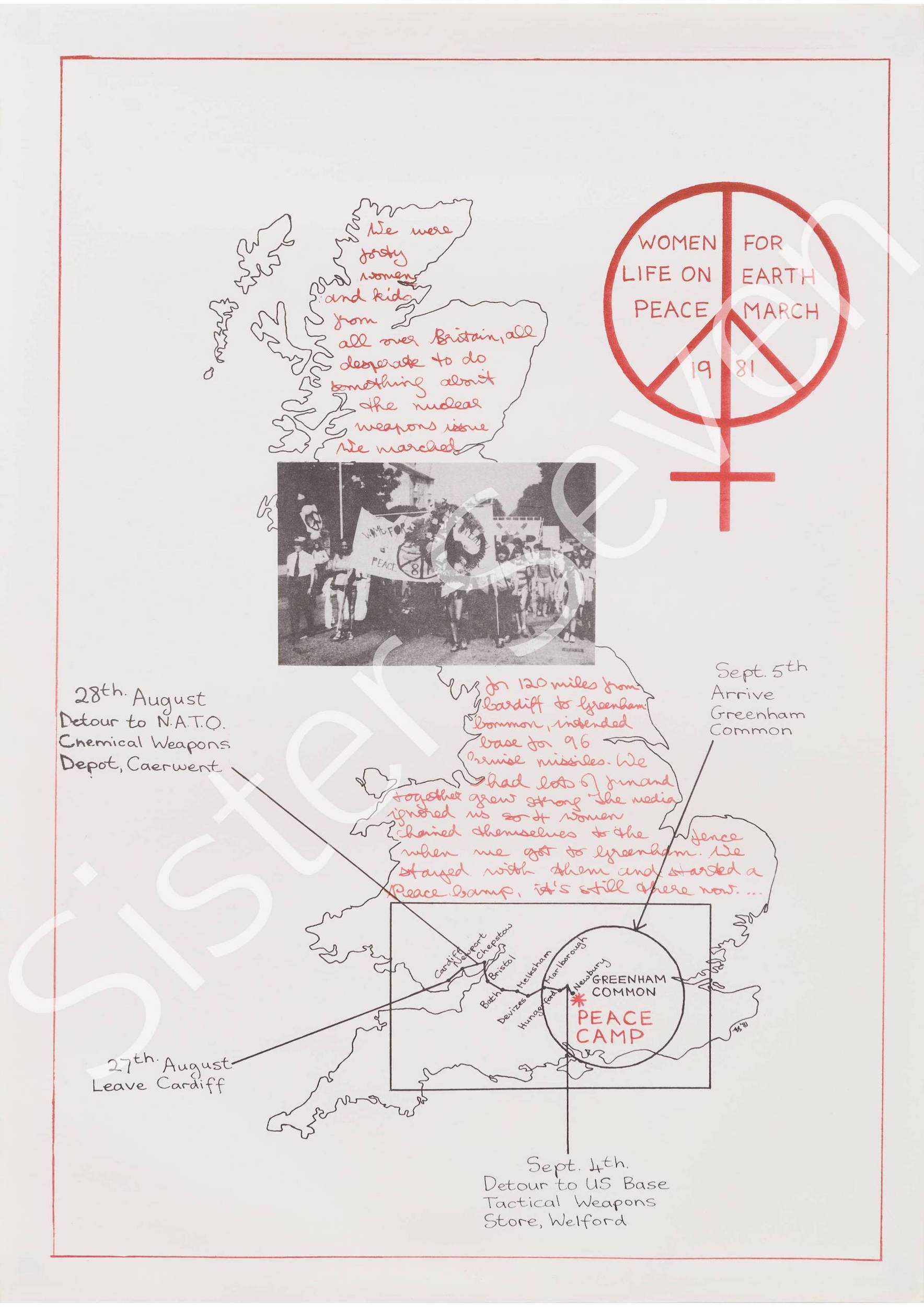
evelyn silver: women for life on earth peace march 1981
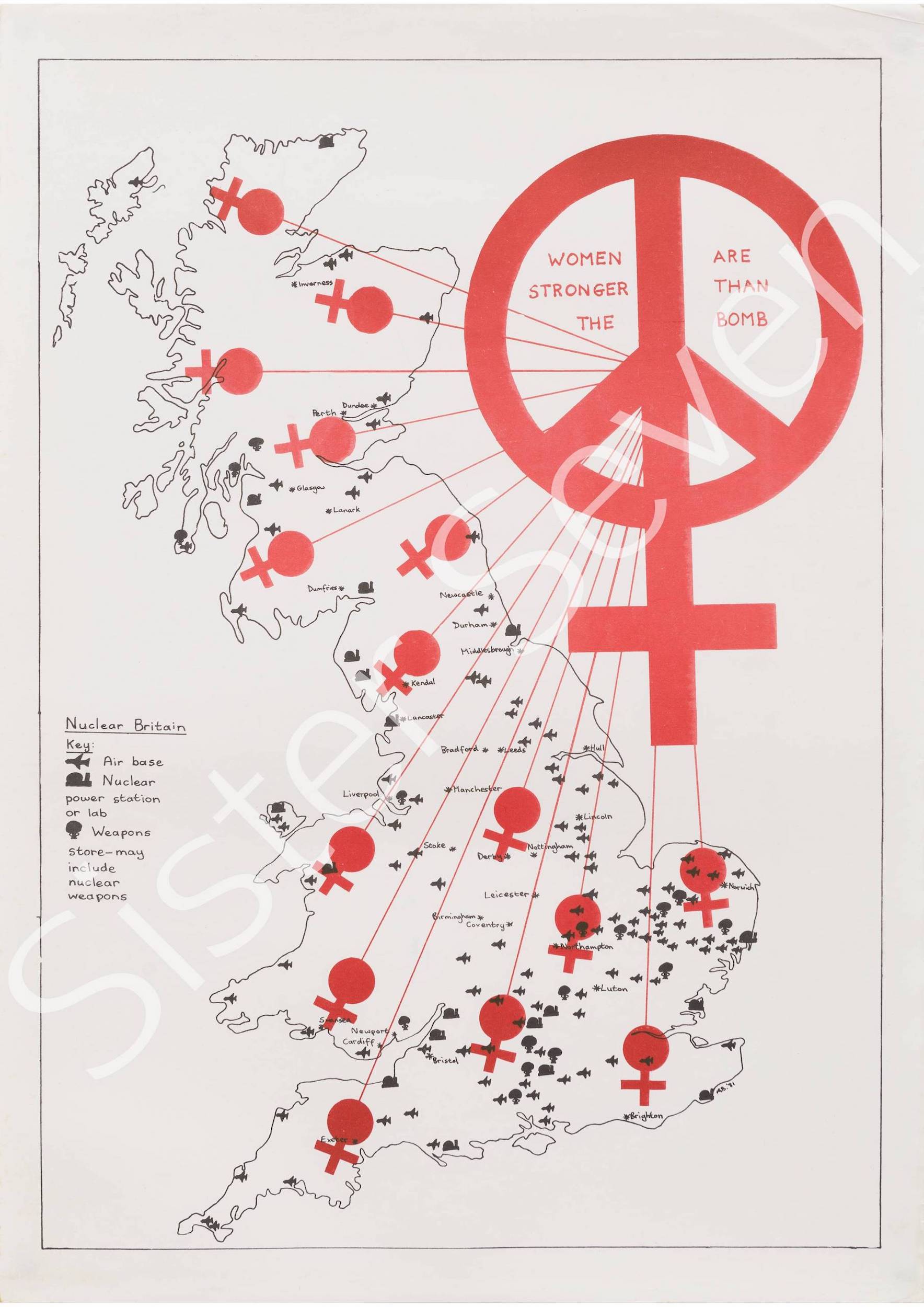
evelyn silver: women are stronger than the bomb
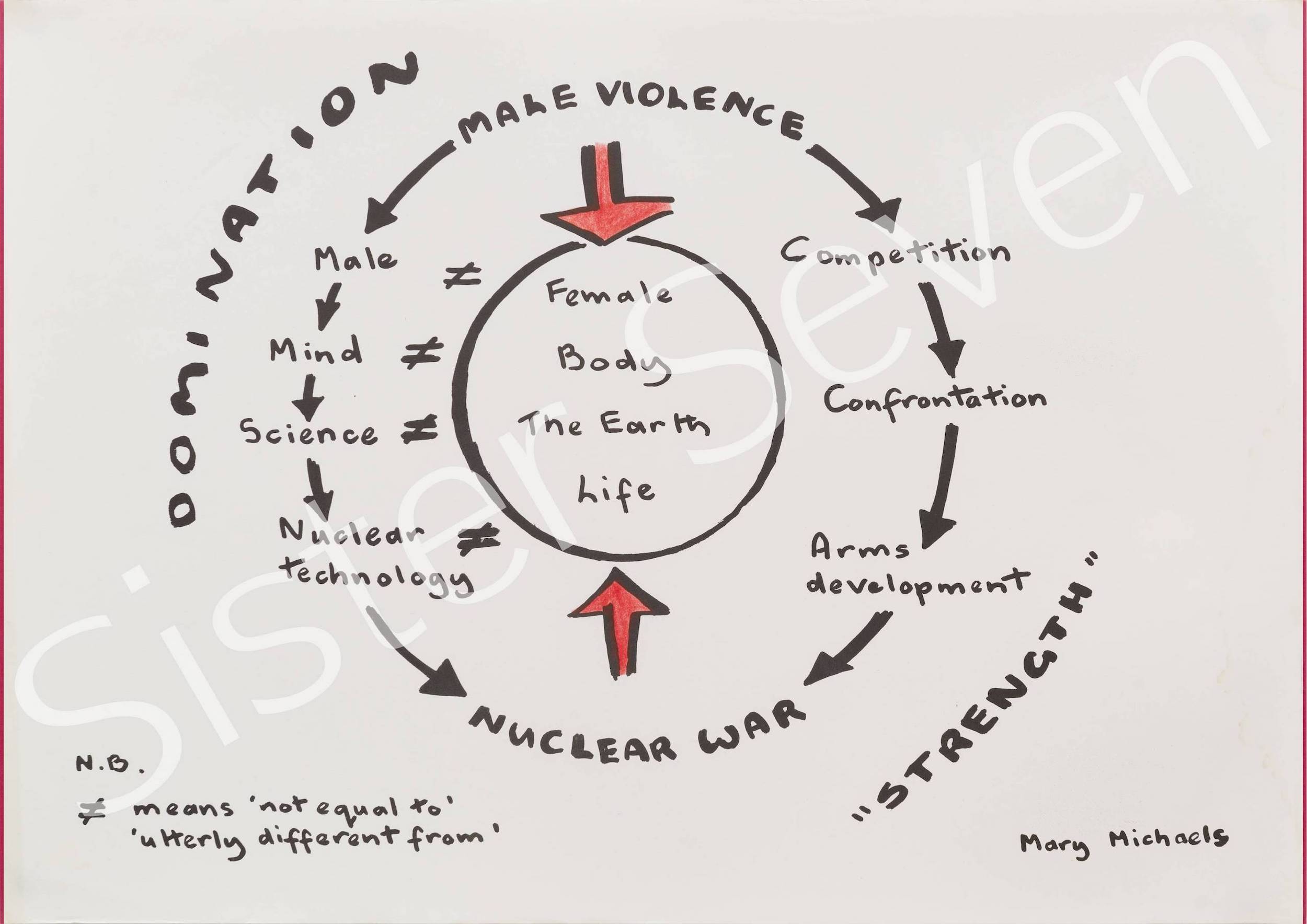
mary michaels
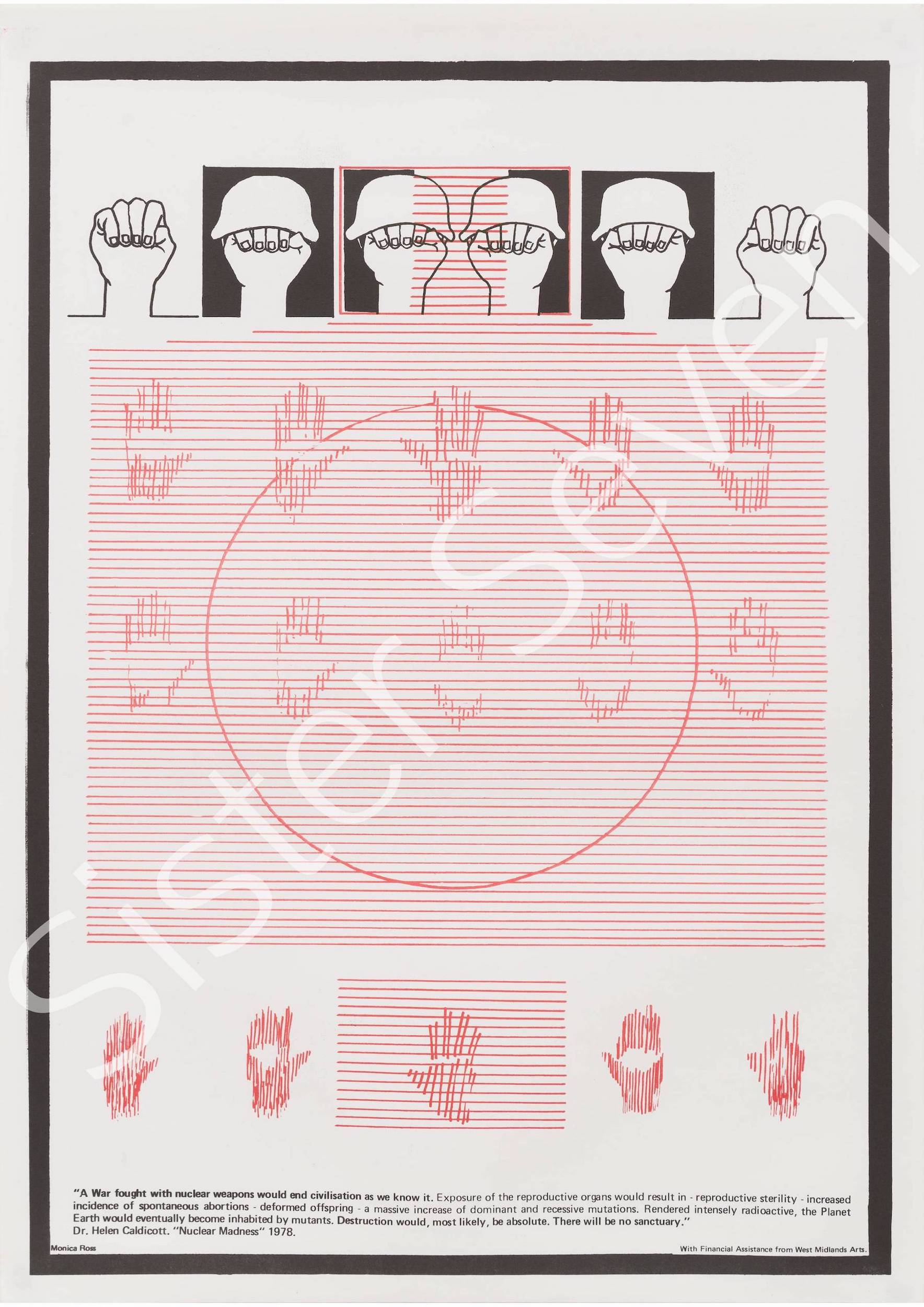
monica ross: nuclear madness
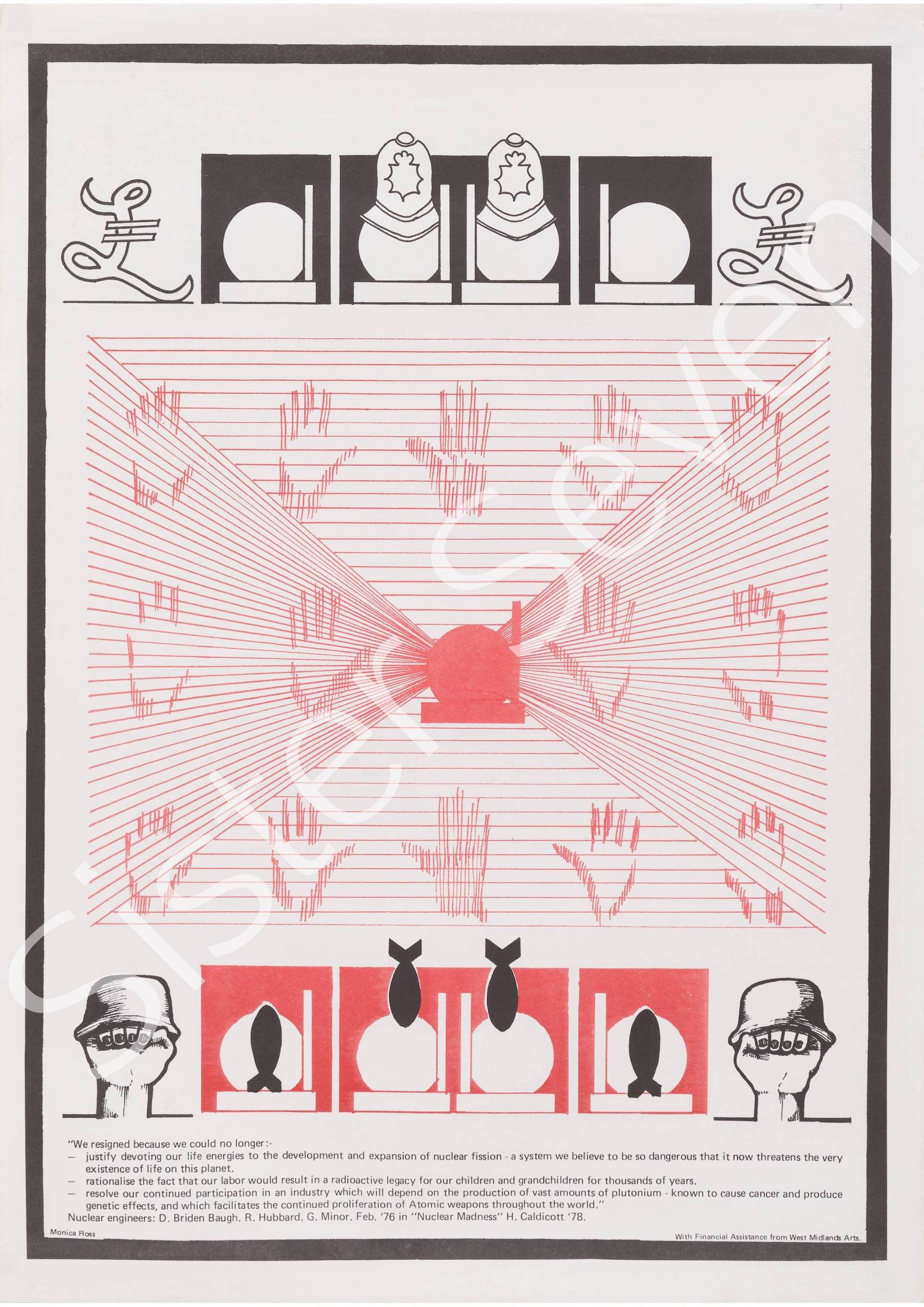
monica ross: nuclear madness 2
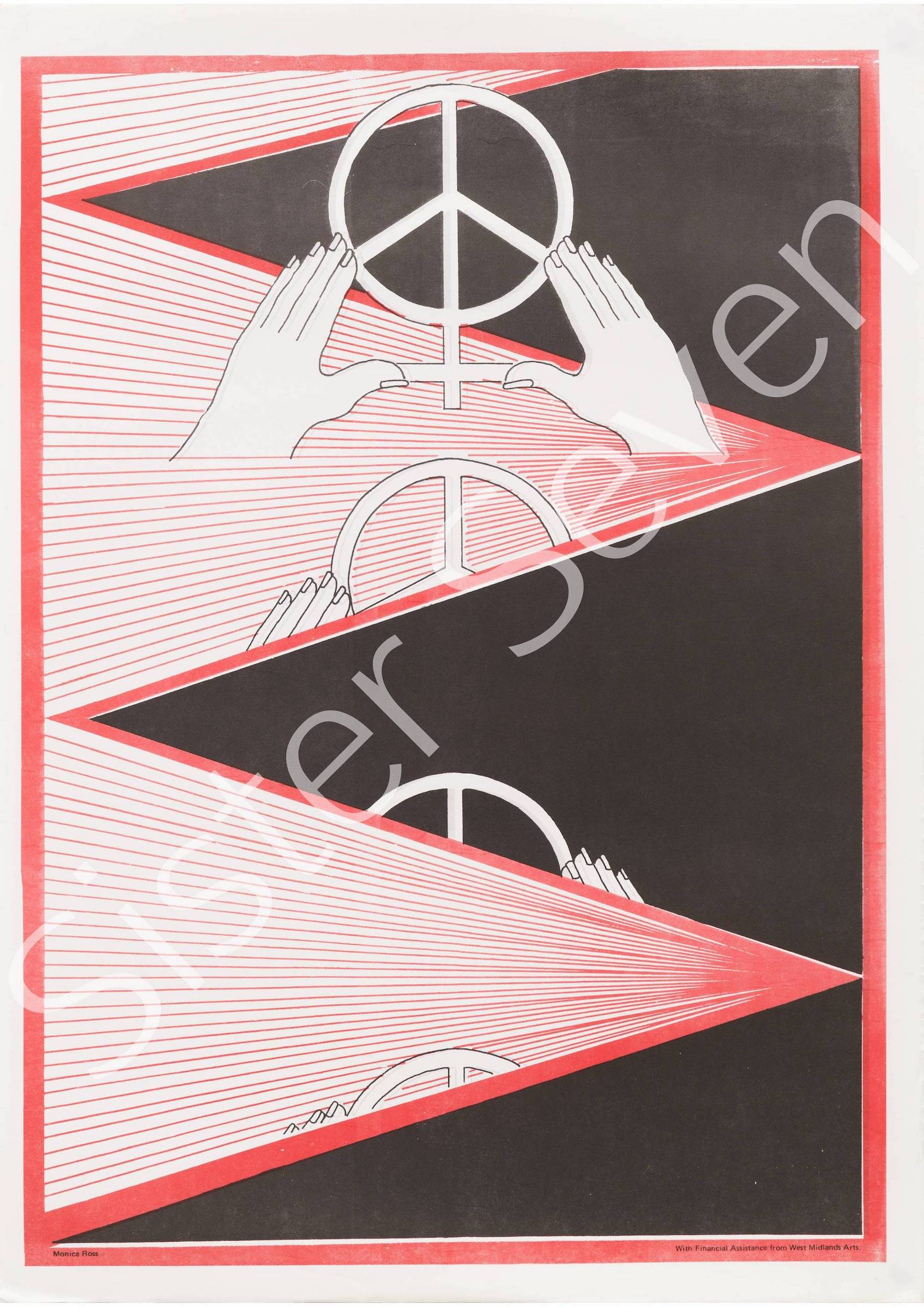
monica ross
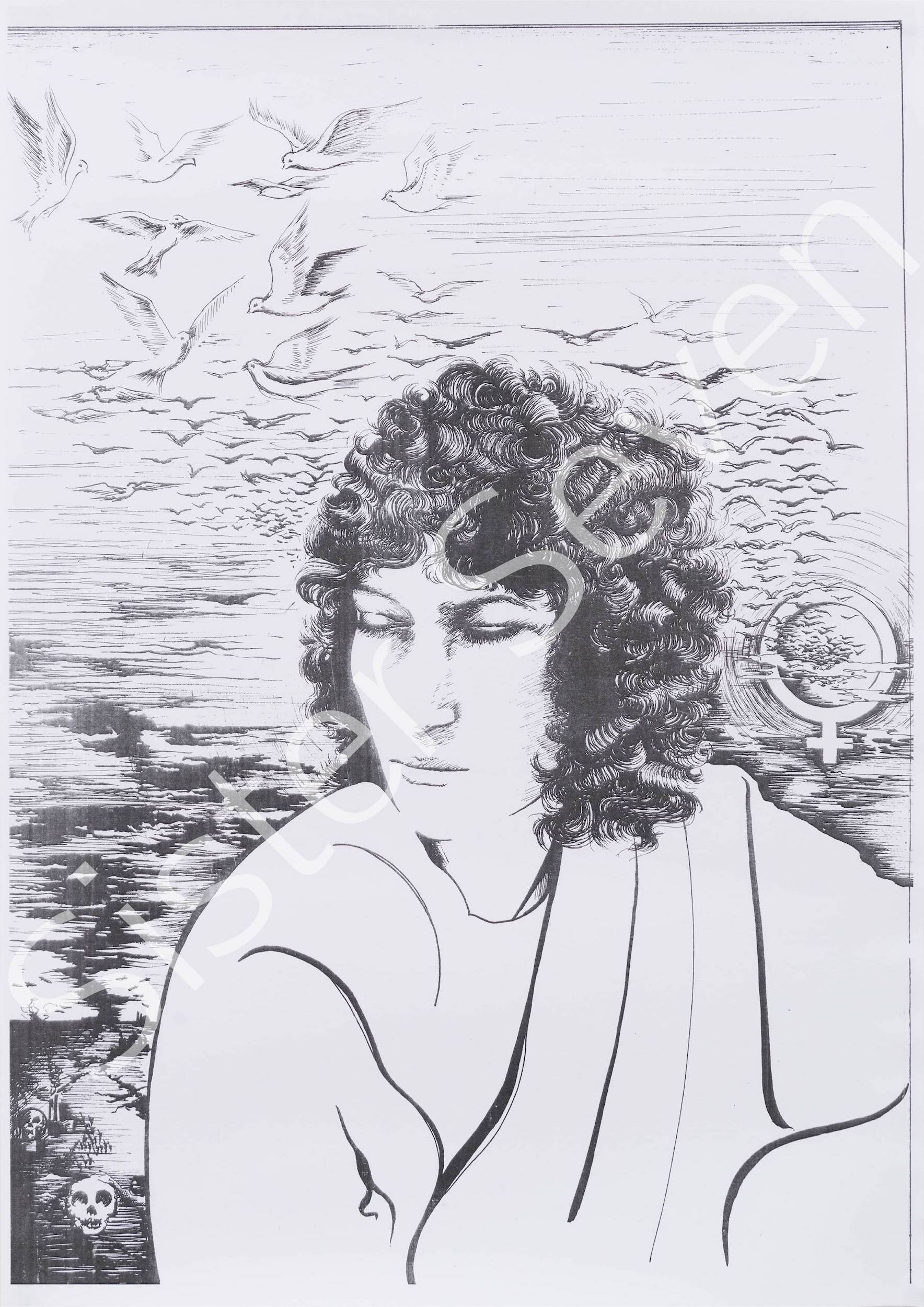
evelyn silver
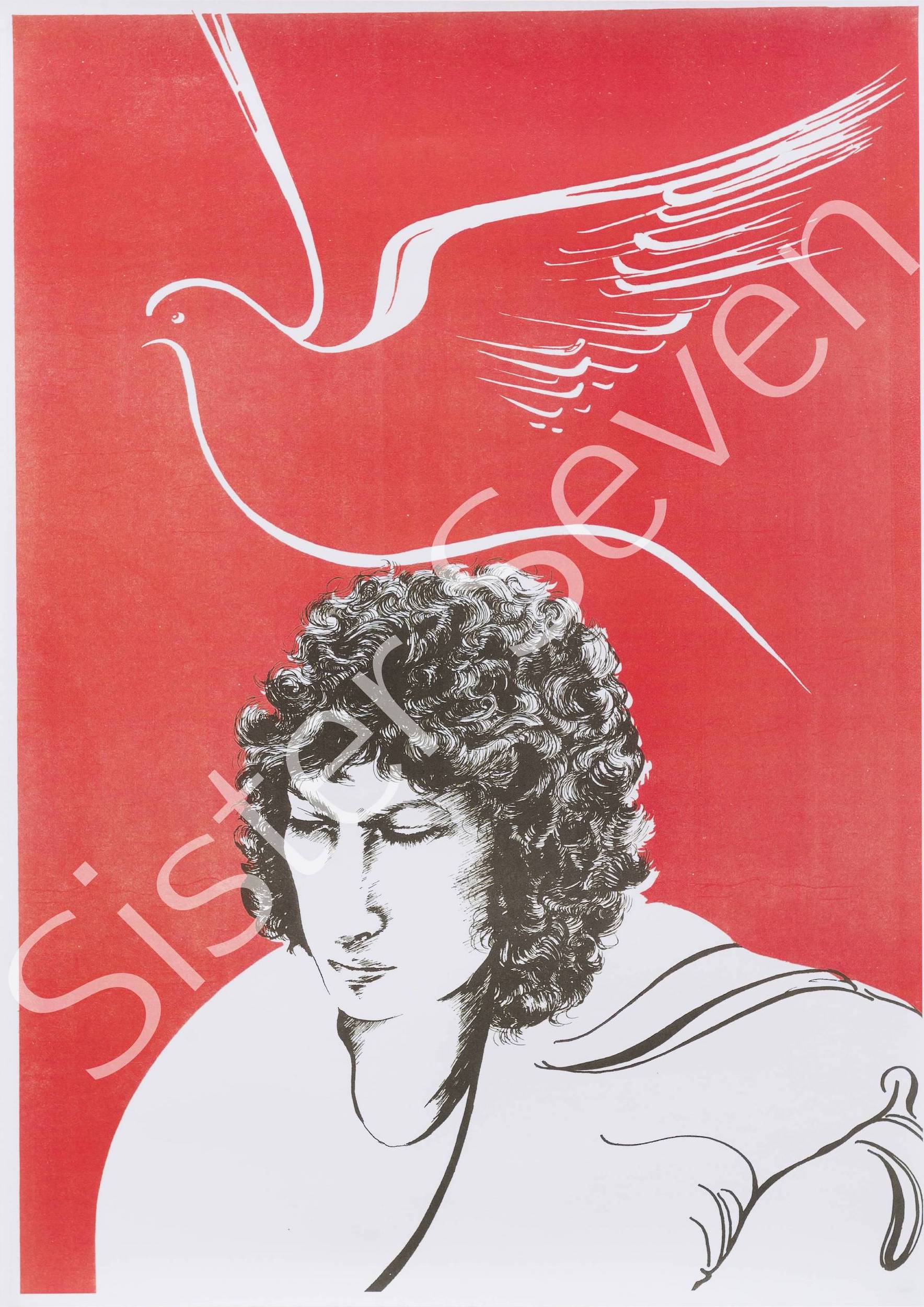
evelyn silver
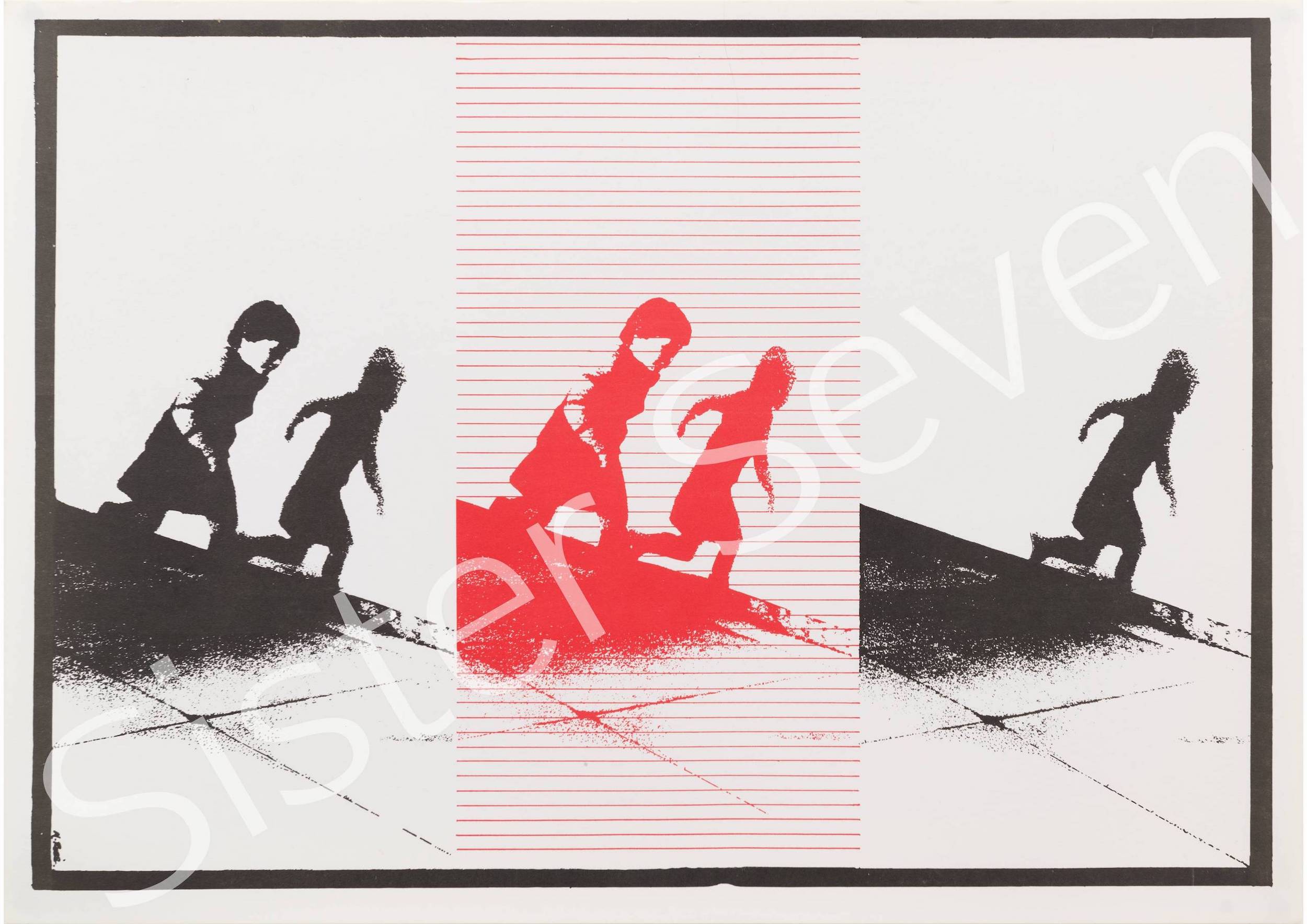
monica ross: alice poster
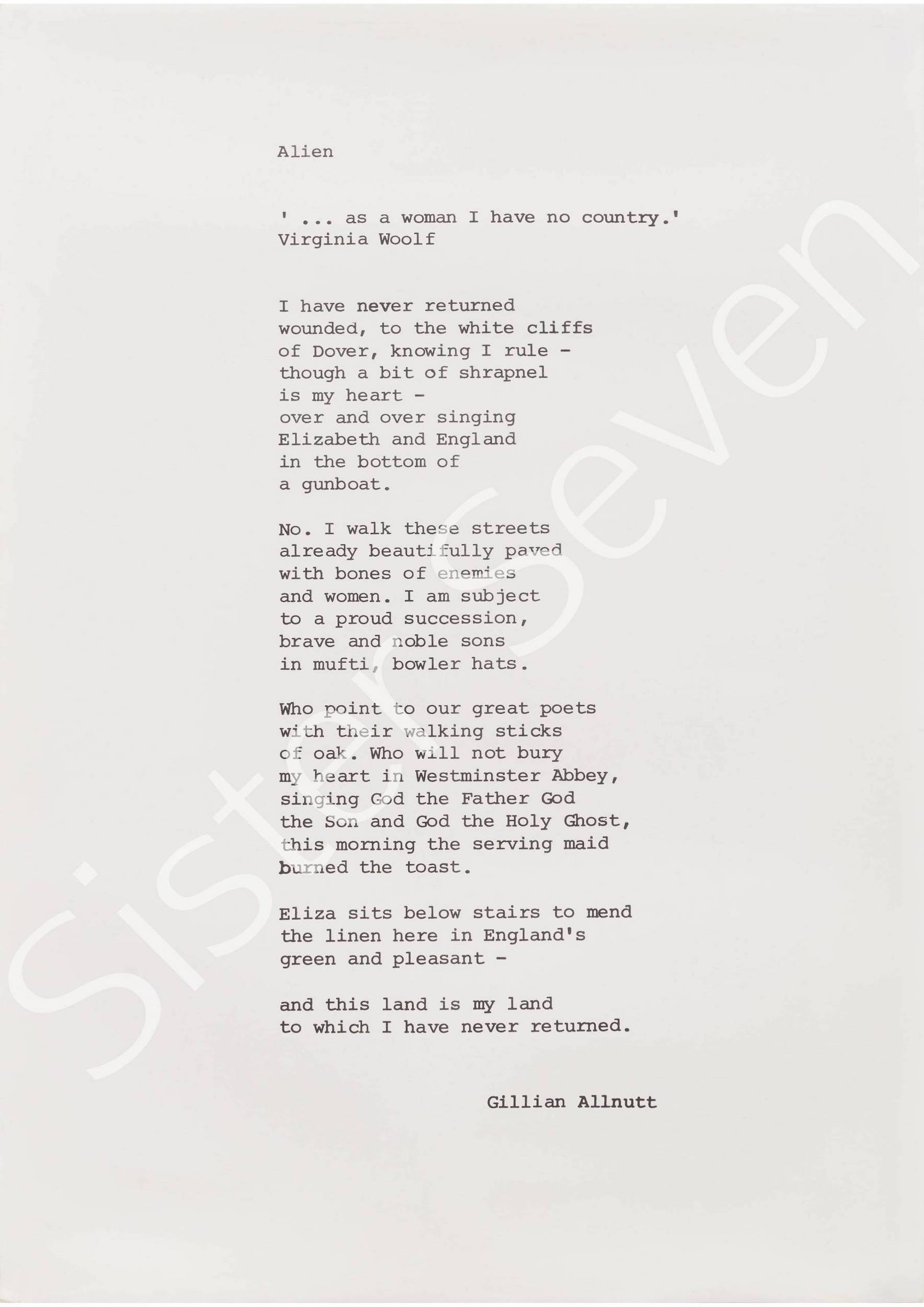
gillian allnutt: alien
.jpg)
gillian allnutt: military industrial complex
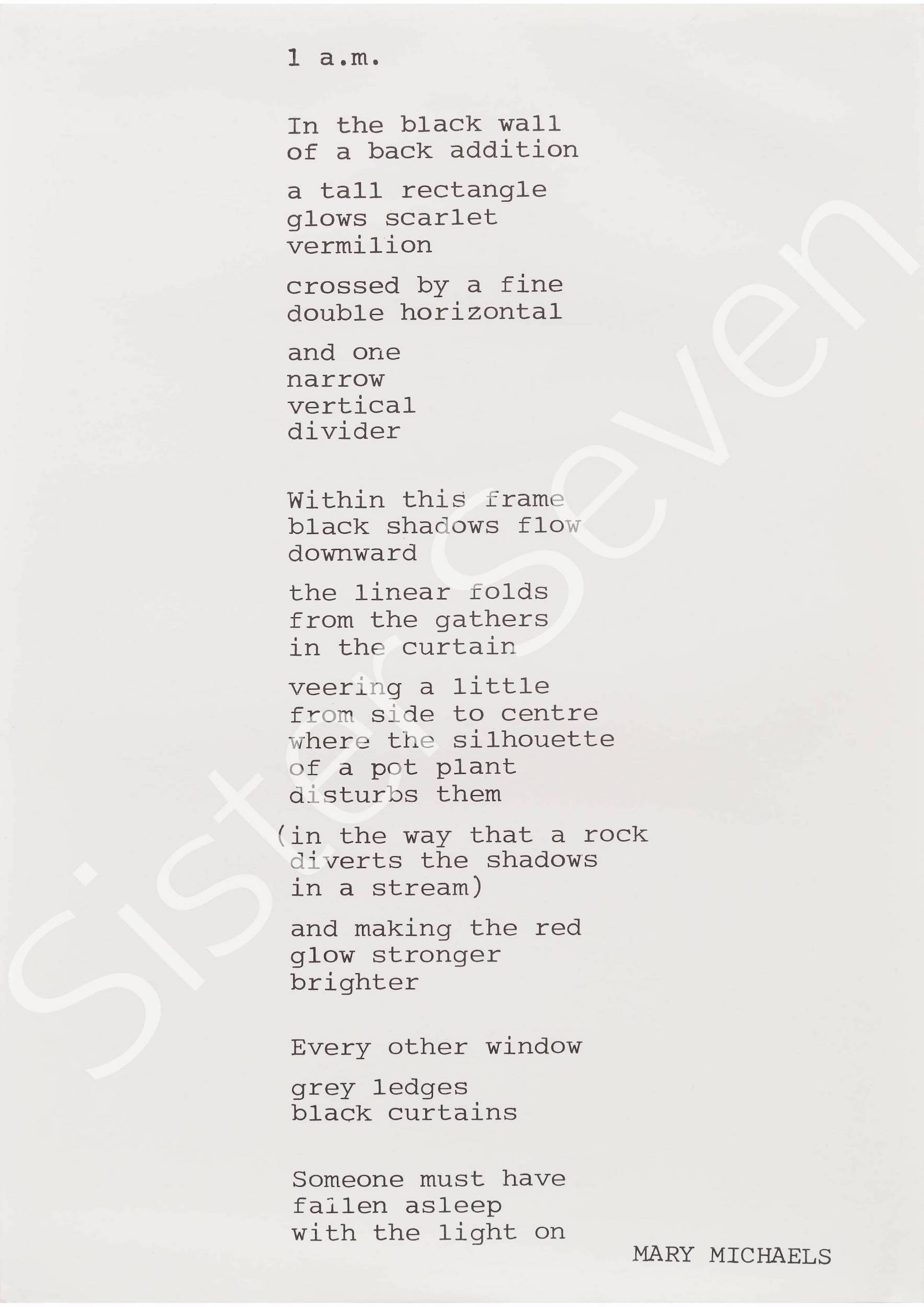
mary michaels: 1 a.m.
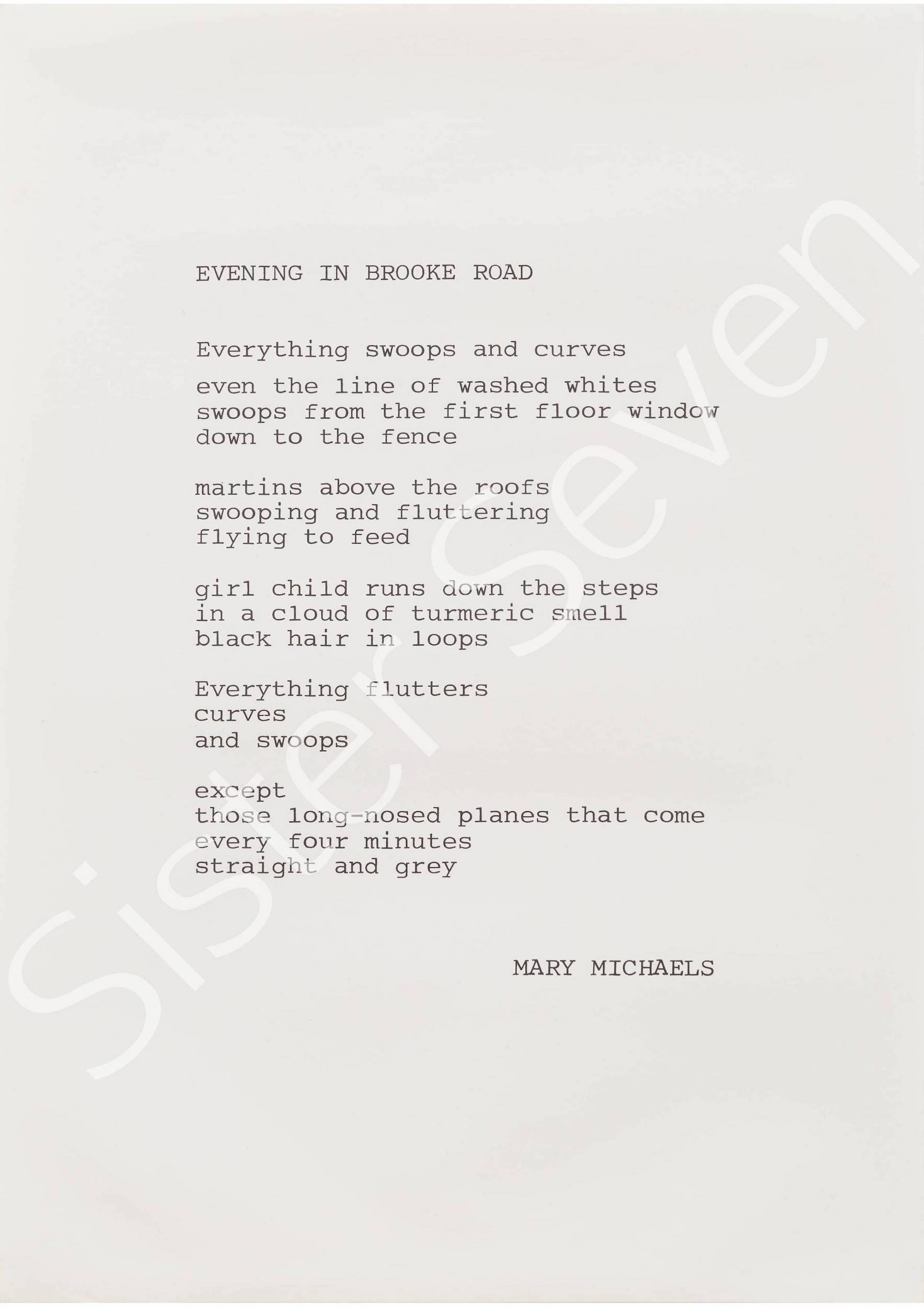
mary michaels: evening in brooke road
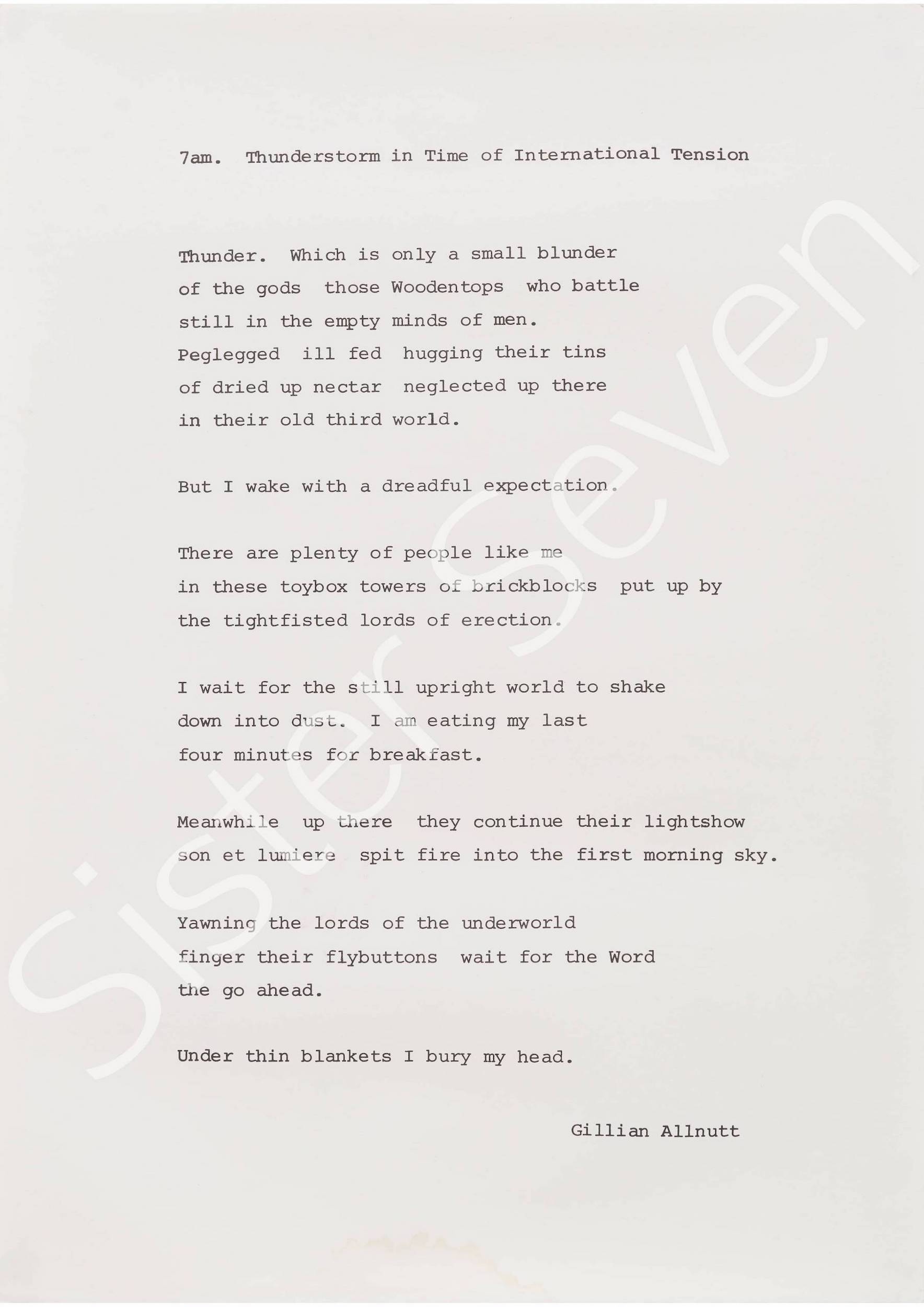
gillian allnutt: thunderstorm in time of international tension
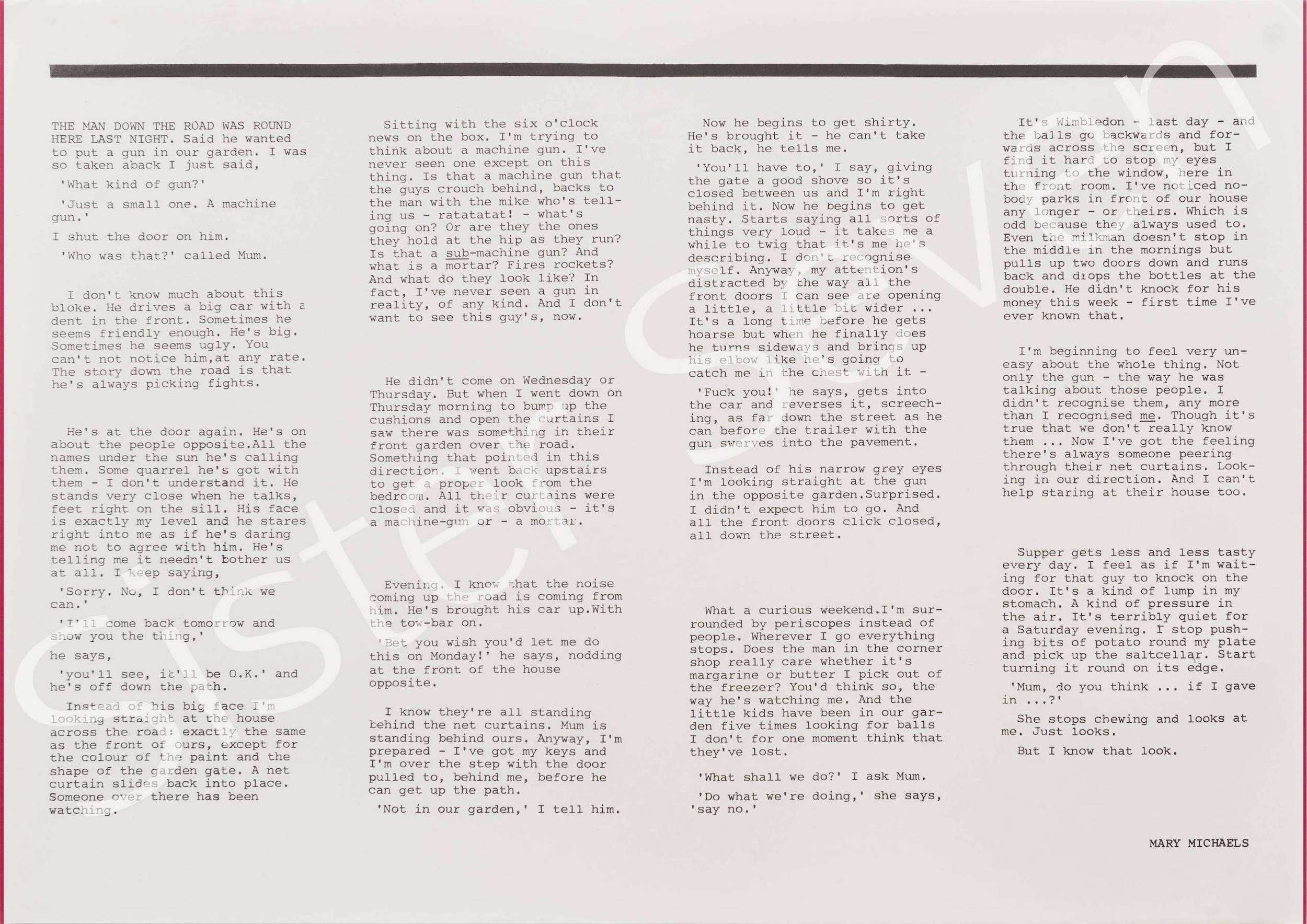
mary michaels: the man down the road
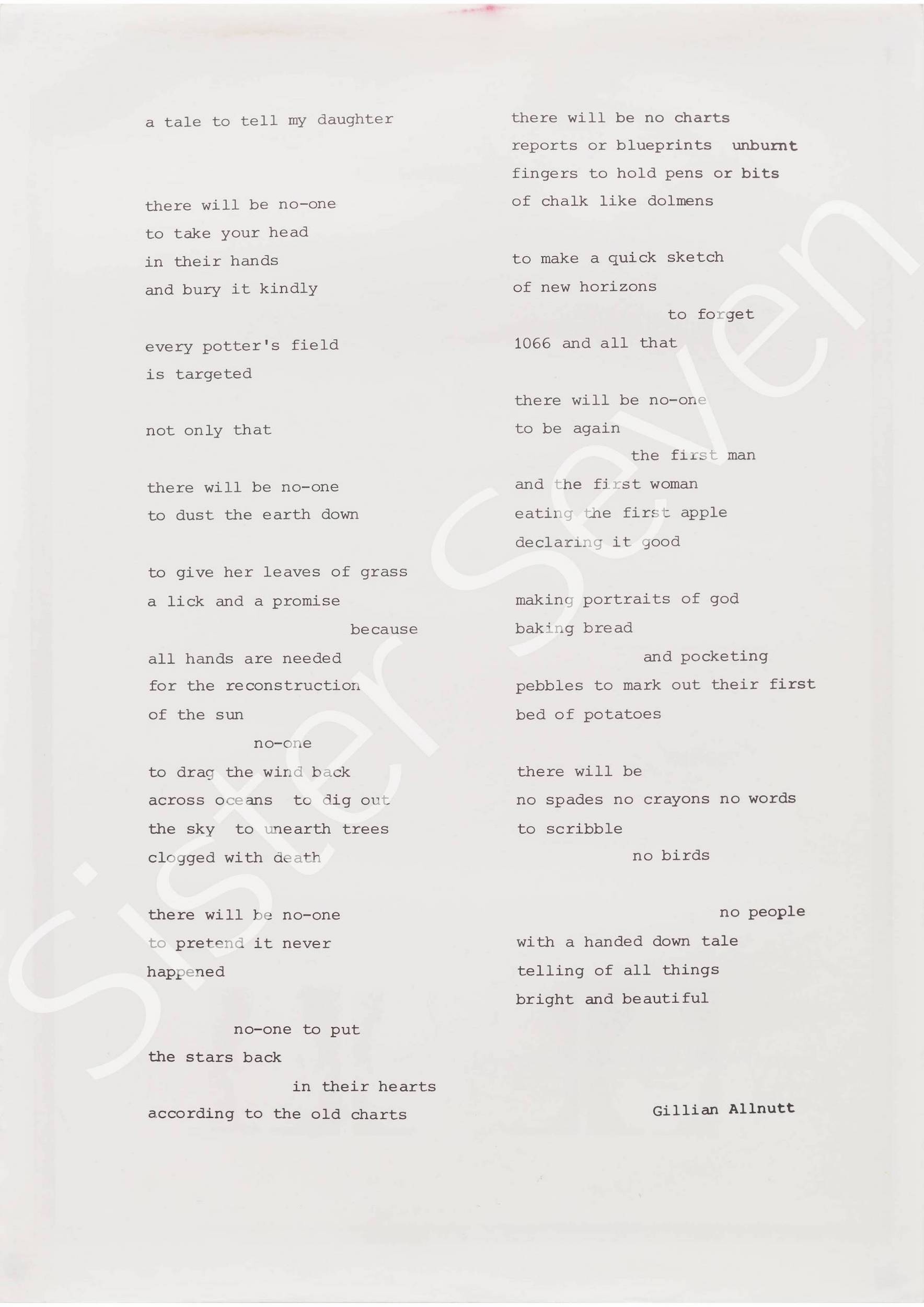
gillian allnutt: a tale to tell my daughter
(1).jpg)
shirley cameron
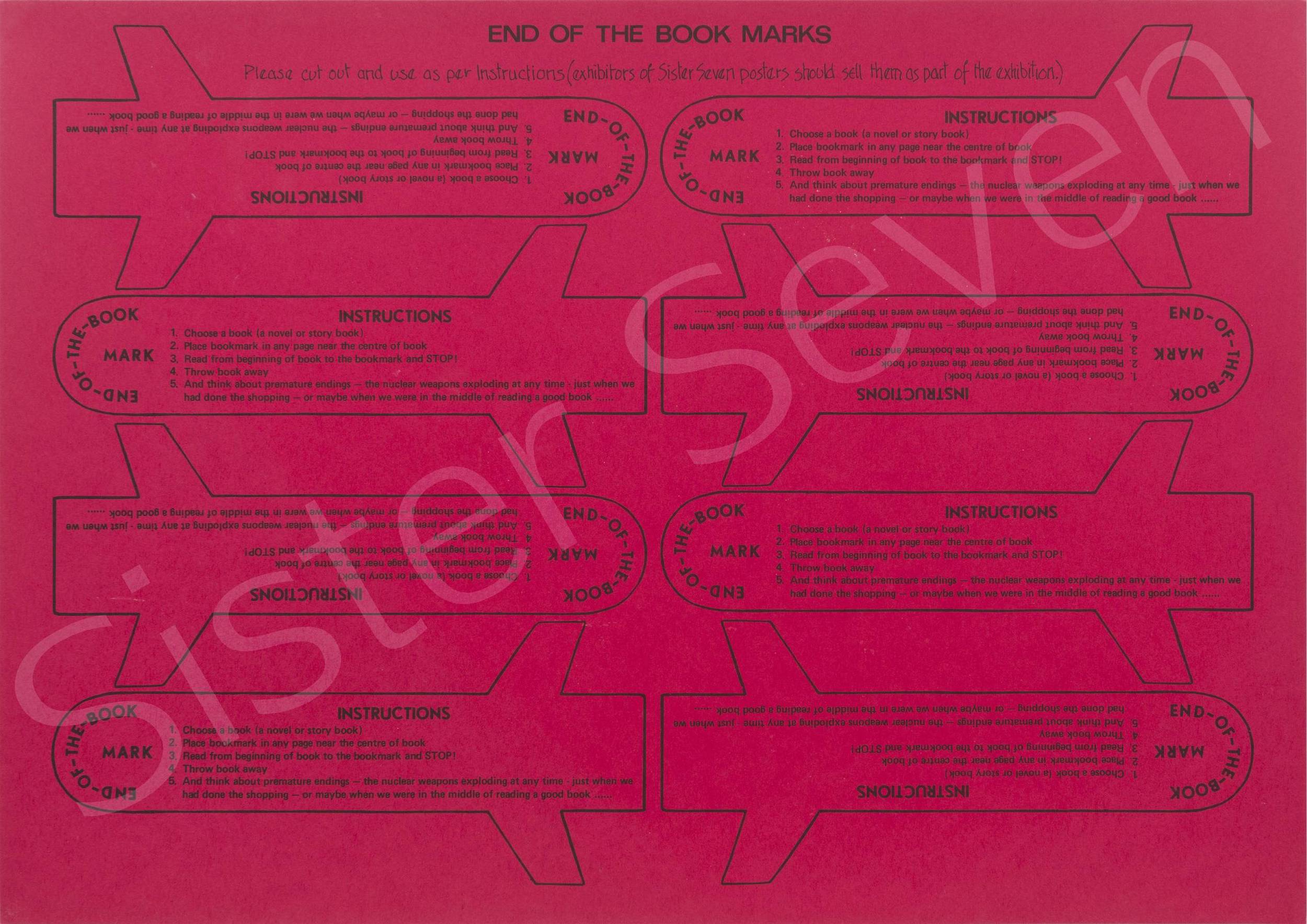
shirley cameron
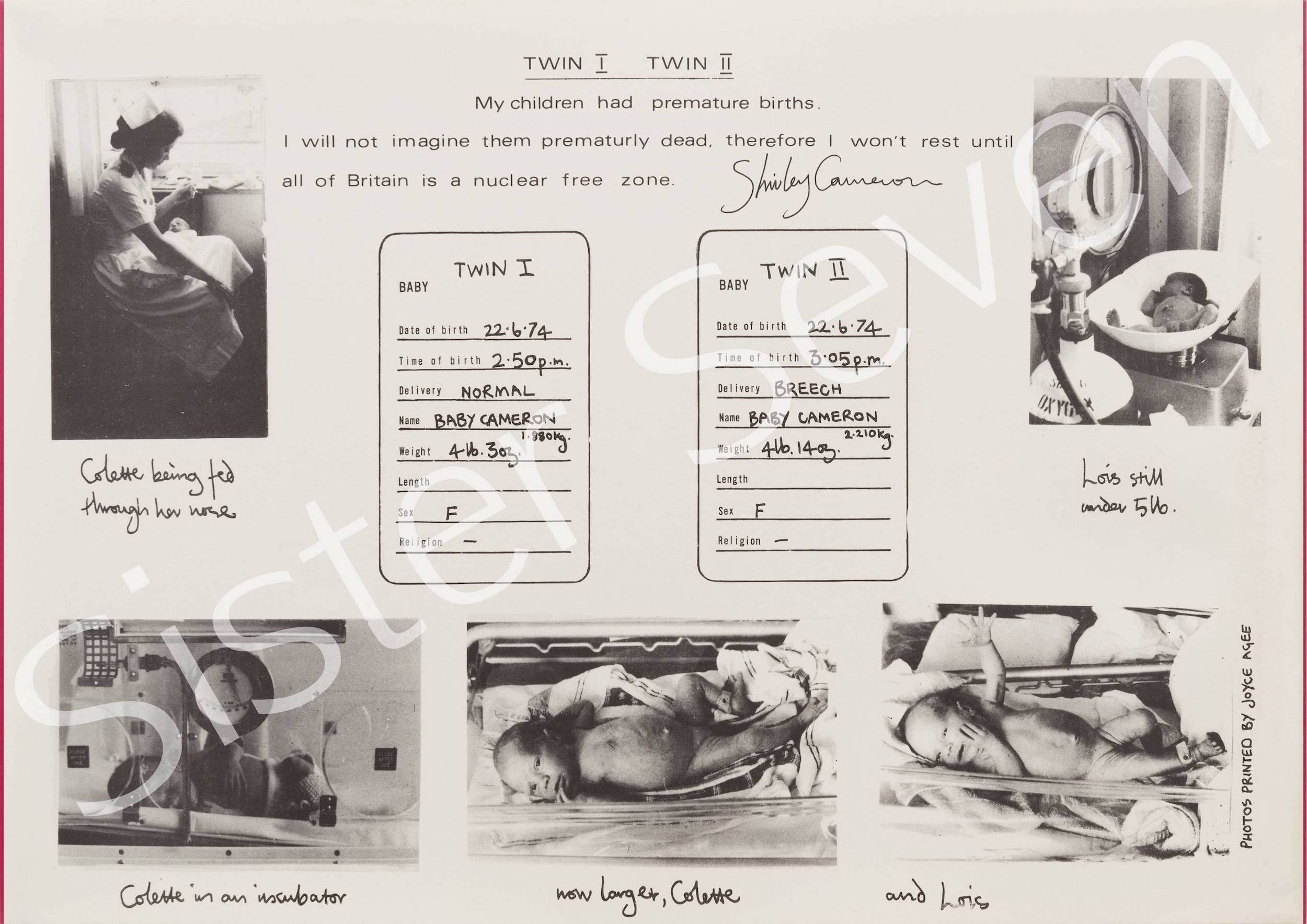
shirley cameron