

These resources are for anyone considering whether to co-recite an article from the Universal Declaration of Human Rights. They expand on the guidance Monica Ross developed while touring Anniversary – an act of memory and reflect how Robert Ayers and the Monica Ross Archive continue welcoming new voices today.
Anniversary – an act of memory began as 60 recitations delivered by Monica Ross and co-reciters. Since her death, people across the world have continued to perform their own recitations of the UDHR. Interest keeps growing, so the Archive is now offering resources, guidance, and support for anyone who wishes to stage their own recitation, and collaborating with Robert Ayers and co-reciters on 80 new recitations for the 80th anniversary of the Declaration in 2028.
80 tribute acts - Robert Ayers and co-reciters
Artists, activists, arts organisations, communities, schools, and anyone who would like to host their own solo or collective recitation check out our resources. Contact us directly with any further questions, reflections and to let us know how it goes. We'll add your recitation here. We'll be in touch with you as soon as we can.
Get in touch for resources to hold your own act of memory: info@monicarossarchive.org.
Artists, activists, arts organisations, communities, schools, and anyone who would like to host their own solo or collective recitation check out our resources. Contact us directly with any further questions, reflections and to let us know how it goes. We'll add your recitation here. We'll be in touch with you as soon as we can.
Contact: info@monicarossarchive.org
There are 30 Articles in the Declaration.
To take part please choose one (or more), in a language of your choice, and memorise it. Your memorisation doesn't have to be word perfect. The emphasis of the recitation is on the attempt, and the difficulty, of being able to meet the Declaration's call to constantly "keep it in mind" and the challenge of being able to voice or act on it especially when under pressure.
The basic method is that someone begins by reciting the Preamble and then announces Article 1 and hands over to whoever is reciting Article 1.
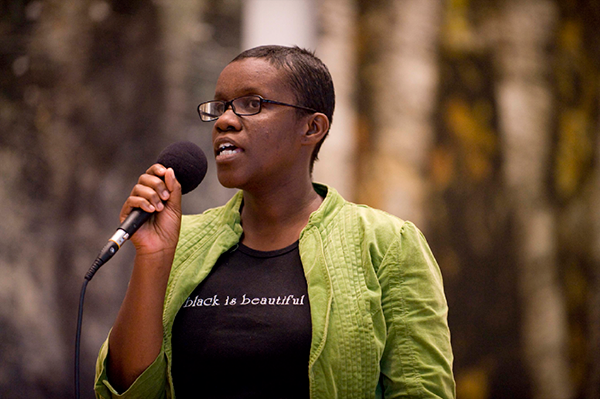
When an Article number is called out whoever has learned that Article recites it from memory, in whatever way and language they prefer.
The performances take between 35-55 minutes depending on the workings of individual memory and how many people participate.
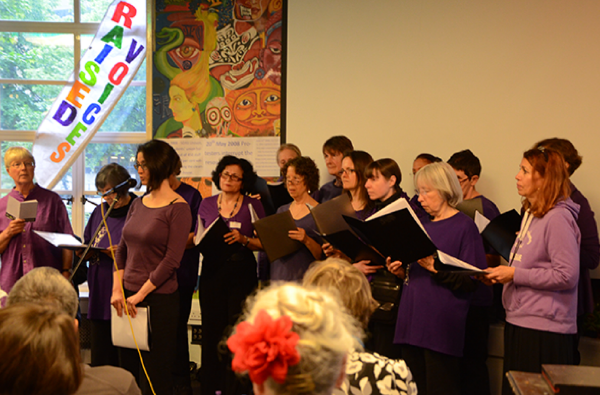
Sometimes the same article has been memorised by several people in one or more different languages. This produces a special kind of resonance which is specific to each context.
The matter of 'no rehearsal' is very important.
Download and share these resources for holding or supporting an act of memory.
You can find translations of the Declaration in many languages and formats here. Your approach to reading the Declaration is unique. Your experience of reading it may raise many questions and emotions.
Reading the Declaration slowly gives you time to notice where the language feels close, distant, urgent, troubling, hopeful, or unfinished. That personal encounter is part of the work, but so is the collective encounter: the text becomes stronger when people support one another to carry it. The recitation can become a meditation on rights, needs, dignity, and interdependence rather than a fixed statement about what rights mean in only one way.
View, Download and Share the UDHR
Perhaps there are ways you would like to amend, update, or translate it. This is the important work of engaging your civic scrutiny of the Declaration that Anniversary – an act of memory sets out to support.
“I went to read the Declaration for the first time, and I got one sentence in and I was so shocked at my own complacency — one, that I had never read it; two, that I assumed that I knew what it said, but I didn’t; and also that I had this very privileged, Western relationship to the document, which was ‘well, we don’t really need it, everything’s fine here’.”
“I decided that I would try and learn it off by heart to see if I could make it part of me and then the second step was to try and recite it publicly, to do a public action where you repeat it as a form of dissemination or reproduction.”
— Monica Ross
Anniversary – an act of memory has always welcomed multilingual recitation. Speaking the Declaration in different languages brings different histories, memories, relationships, and forms of address into the space. It reminds us that human rights are not held in one official voice alone.
Language can reconnect people to family histories, migration, loss, survival, and belonging. One woman, thinking about her Armenian Jewish relative, learned and recited her article in Armenian, a language she had never spoken before. In that sense, multilingual recitation is not only about translation. It can be an act of remembrance, recovery, and relation.
Choose an article that speaks to you. You can choose as many or as few as you like and, if you want to, you can share an article to recite together.
Choosing an article is not just practical. It is a way of identifying what in the Declaration feels personal, political, unresolved, or urgently in need of being spoken aloud. It can also be a way of speaking with and for others whose rights are denied, obscured, or made precarious. Different communities may understand rights differently, and for some people the language of needs, care, or collective survival may feel more apt than legal language alone.
You could try repeatedly writing out your article, singing it, reading it aloud while walking, dancing, or whatever works for you.
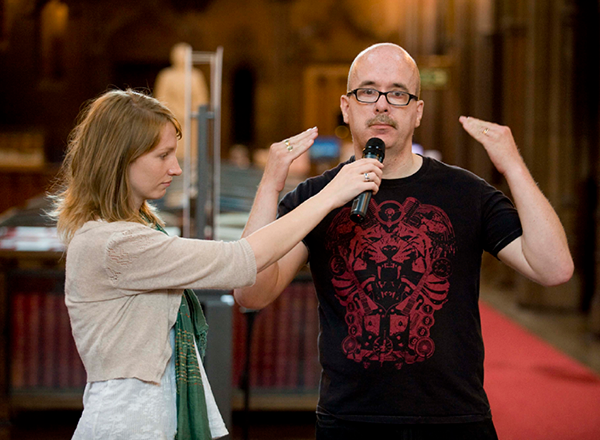
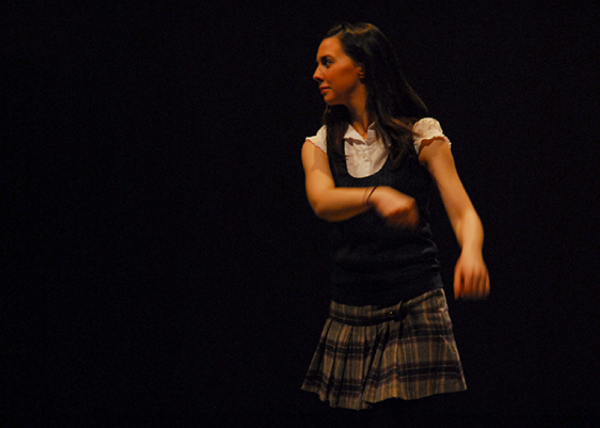
Trying to memorise the text changes your relationship to it. Even partial memory can make the Declaration feel less like something external to read and more like something you carry, test, and inhabit. In the first 60 acts, co-reciters supported one another in many ways: prompting when someone paused, signing, moving, dancing an article's force or impression, and helping the words travel collectively rather than alone. Technology can also be part of that support: people have played recordings on phones of recitations by those who could not attend, used devices as aides-memoire, and shared urgent communications when rights or safety were under threat.
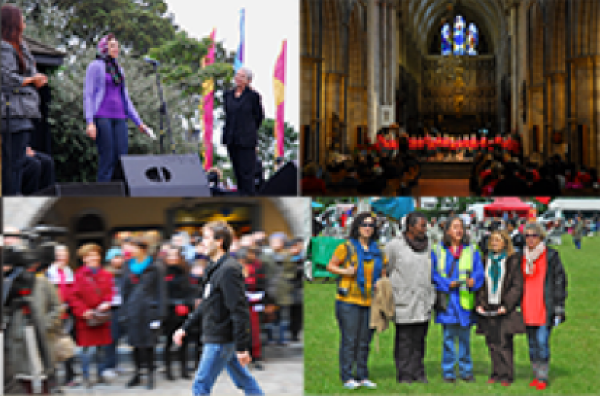
You will be welcomed by Robert Ayers, who will be leading the recitation. You are invited to add your name, article, and language to the article list if you wish, but you don’t have to.
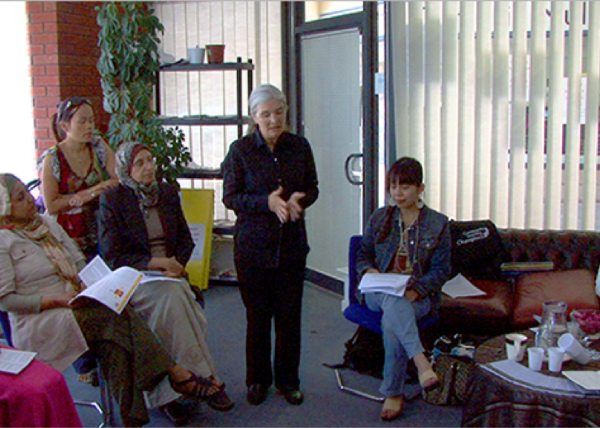
You’ll meet your fellow co-reciters and decide together what order you’ll take your shared articles in.
This work has always been about more than individual recall. It builds communities of attention, encouragement, and mutual support. Reciting together can model the kind of network people need when rights are threatened, withheld, or violently denied. It can also help us think about digital citizenship: how phones, recordings, messages, and alerts can support memory, connection, witness, and urgent communication.
Location matters too. Recitations can reclaim civic space, make public places feel community-centred and safe, and create conditions in which arts institutions, their staff, and their audiences can think together about rights, care, and responsibility.
The recitation will be filmed and photos may be taken on the day. You can choose any of the following options:
Anonymity can be a form of agency rather than a withdrawal from participation. It can protect vulnerability, foreground the collective over the individual, and echo feminist strategies such as Feministo's reminder that anonymity itself can be political: "Anonymous was a woman."
When everyone is ready Robert will say the article number and pause. When you hear your article you may step forwards and recite.

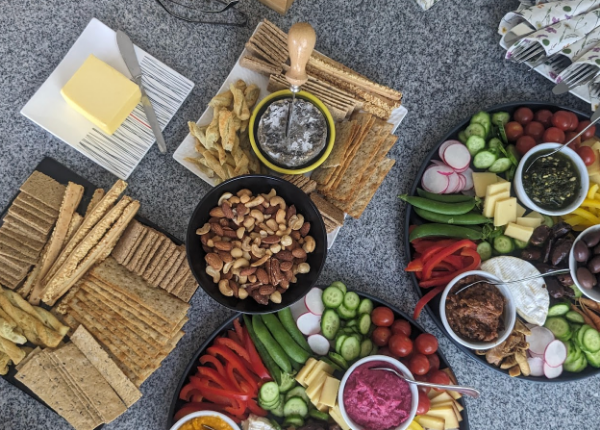
The most important part is just after the recitation when refreshments are served and there’s time to share the experience of co-reciting together.
If you can’t make it on the day or you decide not to recite you’ve still been part of this important work by reading and reflecting on the UDHR.
Get in touch for resources to hold your own act of memory: info@monicarossarchive.org.
Questions or ideas? Email info@monicarossarchive.org so we can help you plan, document, and share your act of memory.
Return to the full Anniversary – an act of memory archive for the timeline, films, and previous acts.